Article
Apparel and textile brands have set climate targets, but most of the emissions they need to cut sit in the mills and factories that supply then, where fibre is turned into finished garments. What a supplier can realistically do depends on where it operates: electricity grid, fuel mix, technology supply and access to finance vary by country and often by region, and with them the speed and cost of decarbonising.
Fashion for Good’s Future Forward Factories initiative is trying to tackle that problem. It is building open-source blueprints that give tier 2 textile manufacturers practical, modular pathways to near-net-zero production, with the aim of covering seven geographies by 2030. Its Pakistan blueprint, focused on denim, is due for release in early 2027. (You can sign up to a webinar we’re holding to hear directly from the team behind it.)
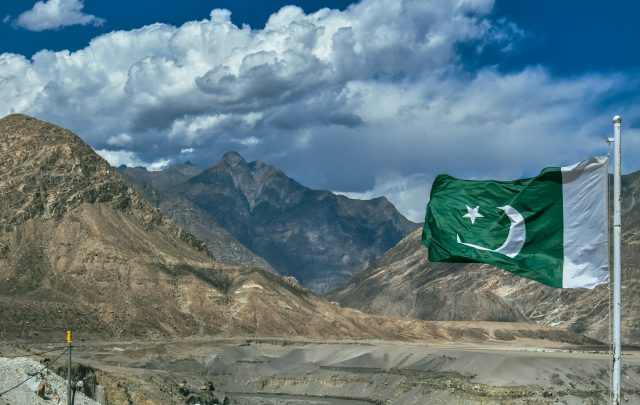
Pakistan is a major global textile hub with strong cotton and denim production. Its textile exports reached over $5bn of the country’s $8.5bn total in July-September 2026, up 5.3% on the year before. But Fashion for Good describes a wet-processing sector that is highly fragmented, dominated by micro, small and medium-sized units running outdated, water- and chemical-intensive machinery. It puts the share of wastewater treated in high-risk clusters at less than 1%. Gas shortages, volatile tariffs and limited access to cleaner heat or renewables push factories towards diesel or coal. Innovation adoption is low, held back by financing constraints and limited exposure to efficient processing technologies.
We asked Farrukh Mirza, senior manager, sustainability and compliance at Artistic Milliners, a vertically integrated denim manufacturer in Pakistan, what that looks like from the factory floor.
What is driving decarbonisation decisions for manufacturers in Pakistan right now?
Energy security, more than emissions. Energy price volatility and gas constraints define the situation in Pakistan at the moment. The processes at denim manufacturers, such as dyeing, finishing and washing, still depend largely on fossil fuels, and regional constraints make it very difficult to get hold of alternatives. Brands, meanwhile, keep demanding decarbonisation.
Which parts of denim production are hardest to decarbonise?
Heat. Dyeing and washing use thermal energy intensively, and much of the steam behind it still comes from gas, so the heat problem and the gas problem are the same problem. Electricity is the easier half: solar is relatively cheap in Pakistan, so power can be cleaned up faster than process heat.
What are the realistic alternatives to fossil fuels for heat, and what are the trade-offs?
Biomass is the obvious candidate, but it is not straightforward. It is made from agricultural waste, so supply follows the harvest, and the raw material supply chain is still thin. Where you sit matters too: biomass is easier to source in Punjab, where the farming is, than in Karachi, so a mill’s location can decide how quickly it can move off gas.
For many Pakistani suppliers, the most practical approach is a combination of renewable and fossil energy. Recovering heat from processes is another option. We are working with the Apparel Impact Institute on a heat pump feasibility study, to see whether we can produce thermal energy from green electricity instead of fossil fuel. WWF is involved too. Heat pumps are not common in Pakistan, though perhaps a little more so in Punjab.
Which other technologies are you trialling, and what stands in the way of scaling them?
Beyond heat pumps, we are testing washing technology that pulls moisture out of the fabric, so we need less steam to dry it, and chemistry that cuts the amount of water needed in dyeing.
The main barriers to scaling are limited local technical support, the upfront investment, the difficulty of integrating new systems with existing machinery and the need for closer collaboration with brand technology platform providers.
Innovation takes money, and it takes time. A new dyeing innovation takes six to eight months just to test payback, policy and optimisation. It is generally much easier if the technology was built for the apparel and textiles sector.
Brands are asking suppliers for deep emissions cuts. What would you like them to do differently to support that?
Brands shouldn’t just set targets without working closely with manufacturers and investing in them. It has to be a shared responsibility. When brands get involved in projects, as some are doing in our Fashion for Good work, it makes it easier for us to invest in decarbonisation. Long-term sourcing commitments from brands help too.
Buyers are talking about sourcing closer to where clothes are sold. Is that good or bad for decarbonisation?
Nearshoring can reduce lead times and emissions, but it doesn’t guarantee lower overall carbon emissions. That is largely because of raw material sourcing and material manufacturing. A product made for the US market may come from a manufacturing unit in Mexico, but the procurement can still come from Asia. In that case, the only emissions you may be cutting are in logistics and transport. Buyers should prioritise total lifecycle emissions instead.
How do you make circularity work in Pakistan, where local recycling technology is limited?
We built our own recycling plant, which runs on green electricity and produces recycled cotton yarn. We installed it in 2021.
But manufacturers can’t do this alone. Brands need to invest in recycling infrastructure, segregation, collaboration and technology. Demand for recycled content grows by the day and brands keep asking for more, yet they are doing little more themselves. Manufacturers that wait are making business harder for themselves in the future, but those that move first need brands to back them.
How do you balance investing in decarbonisation with investing in a living wage?
We don’t see it as a trade-off. There is a strong connection between decarbonisation and workers’ welfare. Investment in energy efficiency, solarisation, waste heat recovery and biomass thermal energy reduces our operating energy costs, and those savings create room to invest further in our people’s wellbeing and welfare.
Environmental and social sustainability have to progress together. Decarbonisation should not come at the expense of workers’ livelihoods. It should help build a more resilient, responsible and socially sustainable manufacturing business.
Innovation Forum will launch its first Asian apparel and textiles conference in Hong Kong in 2027. What is the one question you would put to the brands and solution providers in the room?
For brands: what concrete commitments will you make on financing, purchasing practices and long-term orders to help manufacturers achieve deep decarbonisation?
For solution providers: how will you make advanced decarbonisation technologies more affordable and accessible to manufacturers in developing countries, rather than limiting them to markets with better infrastructure?
Further reading
- Taking Stock of Progress Against the Roadmap to Net Zero 2026 (Apparel Impact Institute, September 2026)
- Low Carbon Thermal Energy Roadmap for the Textile Industry (Apparel Impact Institute and Global Efficiency Intelligence), covering China, India, Vietnam, Bangladesh and Indonesia
- Future Forward Factories blueprints (Fashion for Good)
 Apparel


 Podcast