Article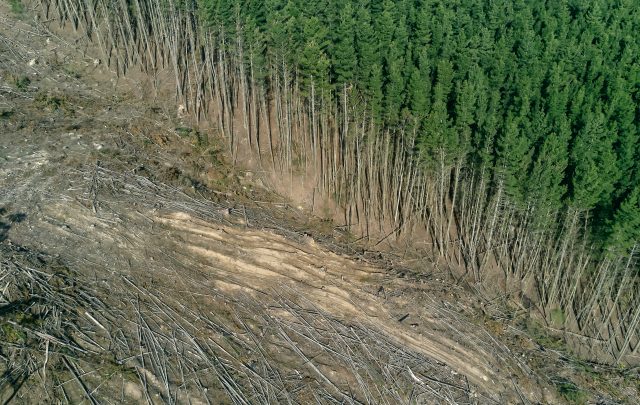
The destruction of the Amazon rainforest in Brazil slowed significantly in 2025 according to research by the monitoring organisation MapBiomass. The data says that 3.1m hectares of forest were cleared, mostly by burning, in 2025 compared to 15.8m in 2024, which was the highest on record. The 2025 number was the lowest since MapBiomass began monitoring Amazon deforestation in 1985.
The Brazilian president, Lula da Silva, had pledged to slow forest destruction when re-elected in 2023. Regulation preventing forest destruction had been relaxed during the administration of Lula’s predecessor Jair Bolsonaro.
Relatively cool conditions in 2025 helped ease the forest fires, scientists say. However the developing El Niño weather pattern in 2026 that pushes up global temperatures could increase Amazon fire risk.
EU bans destruction of unsold apparel
Larger companies in the EU now cannot destroy unsold clothes, clothing accessories and footwear. The measure was introduced under the new Ecodesign for Sustainable Products Regulation (ESPR), which aims to reduce textile waste across the full product life cycle. To give some context, between 4-9% of textiles sold in Europe annually, are destroyed before they are used. Medium-sized companies are next; these will be subject to the same ban from 2030.
Under new rules, businesses must prioritise keeping products in use by selling them, donating them to charities or social enterprises, or preparing them for reuse.
The ban doesn’t apply when companies find items that are unsafe or damaged, counterfeited or that have infringed upon the company’s intellectual property rights, or has been rejected by charities or donation schemes. To prevent misuse, businesses relying on these exemptions must provide proof.
Practitioners mostly view the ban a positive step towards more sustainable practices in the industry. However, some question whether this regulation will change commercial behaviour or if the legislation will just translate to more paperwork for companies. Click here for more insight on this from our apparel and textiles sector lead Niamh Campbell.
Consumers ditching polyester for natural fibres
Gap’s recent re-release of its 1990s “Happy Stripe” design sparked backlash when shoppers discovered the new launch was made from 80% polyester and 20% elastane, rather than 100% cotton as it was originally. Social media users have questioned paying premium prices for synthetic fabric – a reaction that reflects a much broader shift in how consumers evaluate their clothing.
Several studies suggest that consumers are increasingly turning away from synthetics in favour of cotton, linen and wool, driven by a mix of health concerns around microplastics and chemicals. Google searches for “natural material clothing” have risen roughly 850% over the past five years, peaking in March 2026, while searches asking whether viscose counts as a natural fibre are up more than 5,000% — suggesting consumers are moving beyond simply choosing a fabric to actively trying to understand it.
Brands including Reformation, Doen, Pact and Rise & Fall are leaning into natural-fibre positioning, and even activewear labels — historically among the heaviest users of polyester and nylon — are exploring wool alternatives.
However, synthetics are unlikely to disappear from the industry any time soon: polyester’s low cost, durability and versatility keep it embedded across performance and high-fashion products alike.
Carbon-based pricing pushes tourists towards greener choices
Researchers at Hanyang University’s School of Tourism have found that carbon-based pricing promotes greener tourist intentions.
The study ran three experiments using realistic hotel and short-term rental booking scenarios. Carbon-based pricing consistently strengthened pro-environmental intentions across all three studies. Guests had a stronger response to charges than to discounts: a surcharge for wasteful consumption moved people further than a reward for staying under a threshold.
Findings also revealed that the way environmental costs are presented matters. Breaking down environmental costs, rather than folding them into a single total price, had a bigger effect, suggesting that visibility of the charge itself does some of the work.
The researchers argue that a carbon-based pricing approach could become increasingly relevant as smart technologies make it easier to track individual resource consumption. Such approach could integrate environmental considerations into everyday travel decisions. Researchers believe these systems may help support the transition to a lower-carbon tourism sector.
New eight-global-capital fashion coalition
Paris Good Fashion has launched the Fashion Cities Coalition (FCC), bringing together eight capitals — Paris, Milan, Singapore, Dubai, Copenhagen, New York, London and Cotonou (Benin) — for a new model of international cooperation on sustainable fashion. The coalition, unveiled in early July at self-described “action tank” Paris Good Fashion’s annual Midsummer Camp seminar, aims to break down the silos between fashion ecosystems worldwide, sharing knowledge rather than each city working on it separately.
The FCC’s first project will run from 2026 to 2028 and lies on two pillars: building an international library of best practices and running a workshop in each participating city roughly every eight weeks to identify local challenges and turn them into concrete actions. KPMG is developing a common methodology to bring these together, with a final collective presentation planned for Paris in February 2028.
Beyond the eight founding cities, the project has backing from major fashion players including Chanel, LVMH, Kering, the Institut Français de la Mode and Première Vision. Discussions are already underway to extend the coalition to Tokyo, Seoul, Mumbai, São Paulo, Dhaka and Berlin.
Author details




 Agriculture


 Podcast