 Article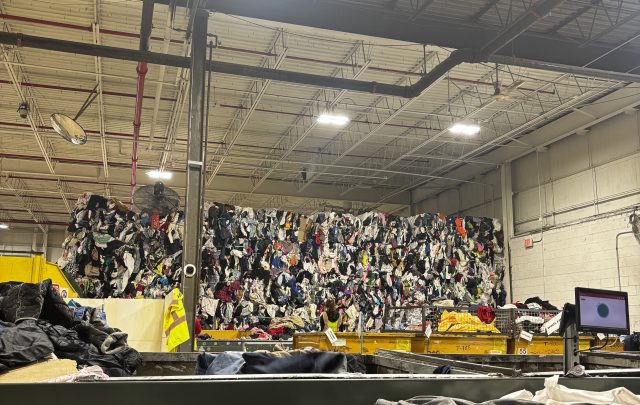
The implementation of the Ecodesign for Sustainable Products Regulation means that large companies can no longer destroy unsold apparel, accessories or footwear placed on the EU market. An estimated 264,000 to 594,000 tonnes of European textiles are destroyed unworn each year, according to the EU’s environment agency. As the first product category in scope, textiles are the test case for whether banning destruction reduces waste or just moves it downstream.
The regulatory instrument
France’s AGEC law set the precedent, banning destruction of unsold non-food goods since 2022 across textiles, electronics and cosmetics. The ESPR, passed in 2024, applies the same at EU level, beginning with textiles, clothing accessories and footwear for large companies.
According to the EU’s primary documents, a company is “large” if it has two of the following criteria: has 250+ employees, exceeds €50m in annual turnover or €25m in balance-sheet total. Anything below that is a medium, small or micro enterprise under the same recommendation’s tiers. The rules apply regardless of where the company is incorporated: Article 1 (2) of the ESPR covers any physical goods placed on the market or put into service in the EU, so a US or Chinese company selling directly into the EU must comply similarly to an EU-headquartered one.
Large companies face the destruction ban from 19 July 2026; disclosure is required in an easily comparable standardised format from 2 March 2027. Medium companies get both obligations from 19 July 2030. Small and micro enterprises remain out of scope entirely, though the European commission has reserved the right to close this off if it finds large groups routing stock through smaller entities to avoid the rules.
Destruction ban
Destruction is defined broadly under Article 25. It covers physical damage to a product, and it includes discarding unsold goods as waste once they’ve been placed on the market: disposal or energy recovery (burning waste to generate heat or power) both count. Recycling is not an automatic exemption. If a product could reasonably have been resold or reused, shredding it for recycling still breaches the ban.
Certain derogations keep destruction lawful. They cover:
- Dangerous or unsafe products
- Breaches of other EU or national law
- IP infringement
- Expired licence or contractual restriction
- Cases where reuse or remanufacturing isn’t technically feasible because branding can’t be removed
- Products too damaged or contaminated to repair
- Design or manufacturing defects
- Donation genuinely refused, evidenced by outreach to at least three social economy organisations or an eight-week public listing with no takers
- Donated products for which no recipient could be found
- Reuse-prepared for which no recipient could be found
Article 24 requires large companies to disclose, on an annual basis, what happens to unsold products they discard. From 2 March 2027, disclosure must give the number and weight of discarded products broken down by combined nomenclature (CN) code, the EU’s standard product classification system used for customs and trade, the reason each batch was discarded including any derogation relied on, and where the stock ended up: resale, donation, recycling, recovery or disposal. Documentation must be kept for five years and produced within 30 days if a competent authority asks for it.
Impacts?
Destruction minimises costs, and the ban replaces that option with storage, processing, routing and reporting costs, all of which will tighten margins. They will also have to appear in a public disclosure. The logic is that rising disposal costs will encourage brands toward tighter forecasting and smaller, timely production runs that minimise excessive production.
This isn’t just a theoretical response to ESPR. Fashion brands already face separate pressure to cut capital tied up in unsold stock: 2025’s tariff volatility pushed 27% of fashion executives to cut product assortment to reduce exposure, according to McKinsey and Business of Fashion’s State of Fashion 2026 report, with brands including Levi’s treating inventory discipline as a structural defence against a more volatile trading environment generally. ESPR adds regulatory pressure on top of an industry already grappling with poor forecasting and a speed-to-market model it hasn’t fixed.
Brands may improve their inventory mix without materially reducing volume. A ban on destruction addresses a symptom rather than the deeper root cause of overproduction: the low cost of producing garments relative to the cost of guessing demand wrong. Batch economics still favour producing more than expected demand in many cases, because fixed costs spread more thinly across a larger run and because of the lost revenue of under-ordering.
Non-compliance costs
Brands may simply start selling excess stock at cost or under it, fuelling further consumption and pushing the waste issue onto consumers. There is also no EU-wide penalty figure attached to the ban, and member states are still publishing their own frameworks, so the real cost of non-compliance cannot be quantified yet.
Disclosure however carries a different kind of risk, one that does not depend on enforcement being settled, and instead opens up consumer and investor backlash. The risks are already proven from when Burberry’s 2018 annual report disclosed £28.6m of finished goods destroyed in a single year. In this case, a voluntary line in a routine filing that still triggered investor questions at the company’s annual meeting and public backlash, forcing the company to end the practice within months.
Activist and non-profit pressure has arguably since become more organised and specifically targets production volumes: the Or Foundation’s Speak Volumes campaign has spent several years pushing major brands to publish exactly this kind of figure voluntarily. ESPR disclosure removes the option of staying quiet. Brands that get ahead of this, by acknowledging overproduction directly and showing what they are doing about it, are likely to be in a stronger position than those waiting for the first disclosure cycle to force the conversation.
Over-production risk
The ban confronts overproduction, but leaves oversupply itself unanswered. An operation can run efficiently, with no unsold stock at all, and still cause harm if the garments it sells are worn once and discarded. EU textile consumption is rising rather than falling: the average EU citizen bought 19kg of clothing, footwear and household textiles in 2022, up from 17kg in 2019, according to the European Environment Agency. There is a real risk the policy simply shifts the incentive toward avoiding leftover stock rather than producing less of it, with quality falling as brands discount excess heavily to escape fees and the disclosure of waste.
Whatever stock isn’t destroyed still has to go somewhere, and the regulation points it toward resale and donation, channels that don’t obviously solve the problem either. Brand resale and peer-to-peer platforms such as Vinted have made resale faster and more frictionless than ever, but that speed cuts both ways.
A Yale University study surveyed over a thousand US consumers and found that heavy second-hand buyers retain garments for shorter periods than other shoppers, on top of buying more new clothing overall, a pattern the researchers describe as complementary rather than substitutive, not one that displaces new consumption. Much of what moves through resale platforms in the EU also quickly ends up passed on again soon after, and a large share of that lands with charity shops rather than staying in circulation. The charity and reuse sector that absorbs it has been in crisis for years, with collection and sorting networks already operating at capacity before ESPR adds more stock to the pile.
Other market impacts
The strain is global. Much of this stock would historically have been exported to non-western countries, a genuine opportunity for some local markets in the past, but the volume now arriving threatens to overwhelm it, a pressure the destruction ban is likely to worsen rather than ease.
Retailers increasingly receive an excessive quantity of poor-quality stock, a decline Vogue Business has linked directly to rising ultra-fast fashion volumes, and because what cannot be resold ends up polluting local land and waterways rather than entering a functioning market. Campaigners call this waste colonialism, the practice of exporting a country’s textile waste problem to nations with far less capacity to manage it.
The Or Foundation, working out of Ghana, has documented this for years through Kantamanto market in Accra, and its Speak Volumes campaign pressures major brands to disclose production volumes on the argument that overproduction and export are two sides of the same problem.
This export pressure complicates a simple reading of the ban as an unambiguous good. Destruction, including controlled incineration, is not always the outright villain it is made out to be. Textile sustainability strategist Shivam Gusain has argued that people often confuse controlled incineration in the EU with the open burning of waste, which carries a far worse health and environmental record. His discussion relates more broadly to recycling, but the distinction has real relevance here: if banning destruction inside the EU pushes more unsold stock into an already oversupplied export chain, some garments may end up burned openly in a destination country with weak waste infrastructure, a worse outcome for global pollution and local health than destroying garments under controlled conditions within the EU.
Step up EPR?
The EU’s own EPR scheme for textiles could ease that pressure, though on a slower timeline. Where the destruction ban addresses unsold stock, EPR makes brands responsible for post-consumer waste, funded through a per product fee. That fee could be eco-modulated, as it already is in France, according to how durable and recyclable a product is, giving brands a direct financial incentive to design better products rather than just dispose of surplus ones more responsibly.
The resulting fund could also build the collection and recycling infrastructure that export markets currently lack, precisely the gap that pushes stock toward open burning abroad, and support the communities already absorbing the cost of oversupply in the meantime. Schemes are not required to be operational in member states until 2028, so this remains a medium-term answer rather than an immediate one.
What now?
The industry’s reliance on overproduction, and the global network built to absorb its oversupply, will take more than one regulation and reporting window to shift. It needs sustained policy across the value chain, backed by stronger infrastructure and by financial penalties that actually bite. Making overproduction more visible and more expensive should help change the underlying incentive over time.
For large companies now facing the regulation, and medium companies looking ahead to future compliance, the practical priorities are immediate. Map current unsold stock against the valid pathways now available: resale, donation and recycling, working out what fits which portion of inventory rather than defaulting to the derogations as a first option.
Build the evidence trail for donation refusal early, since the outreach requirements take time to satisfy properly, and reserve the ten derogations for the genuinely narrow cases they’re designed for. Start CN-code level reporting infrastructure ahead of the 2027 standardised format, rather than waiting for the deadline to force it.
None of these address why the stock existed in the first place, which is the harder and more useful problem to solve. Smaller, more frequent production runs tied closer to actual demand reduce the volume that needs managing under any of the above. Fewer, better-selling styles cut the SKU complexity that makes accurate forecasting difficult.
Supplier relationships flexible enough to support smaller order quantities remove some of the batch-cost pressure that makes overproduction the cheaper option by default. Brands already in scope, and the industry more widely, should use this moment to frame sustainability within the business case rather than alongside it: this is what captures CFO attention and budget, not a values statement bolted on afterwards.
But… oversupply!
But fixing overproduction only solves a part of the problem. It says nothing about oversupply: garments that get made, sold, worn once and discarded, at a rate the EU’s own consumption data show is still rising.
That shift cannot come at the cost of ignoring where the waste is going in the meantime. The people already living with the consequences of Europe’s oversupply cannot wait for the rest of the policy to catch up. A regulation that succeeds only by pushing its costs downstream has not solved the problem it set out to fix.
Author details

 Apparel


 Webinar
 Podcast