Article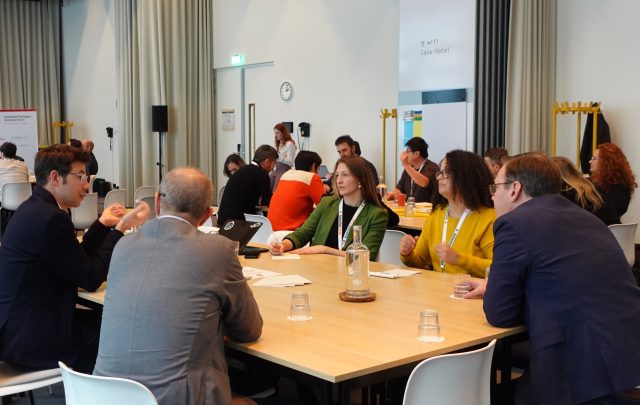
Discussions at the recent Sustainable Packaging Innovation Forum in Amsterdam made clear that packaging sustainability is becoming central to business strategy. Across the value chain, whether packaging is a product to sell, a cost centre, or a source of post-consumer feedstock, the call for harmonised, complementary, scalable and affordable solutions was consistent.
Regulation dominated the conversations. PPWR requirements, EPR fees, and the incoming Circular Economy Act in the EU are already influencing design and sourcing decisions, yet making the internal business case for innovating now remains a challenge. There is growing awareness around the need for diversified and integrated packaging solutions across B2C and B2B channels, to be able to realistically meet compliance needs and waste reduction targets.
Increasingly, companies recognise that a robust packaging sustainability strategy goes beyond an LCA exercise: it’s an opportunity to future-proof products and operations.
Following here are some highlights from our roundtable discussions at the close of the forum, and takeaways from the wider discussions.
Making reuse systems work
Alongside debate on recycling capacity and post-consumer recycled content integration, the reality of reuse systems also occupied an important space in the conversation. This focused on concrete examples of interoperable reuse systems in retail settings across France, UK, the Netherlands and Belgium, reflecting on the role of regulatory support and incentives for returns in enabling their deployment at scale.
The key takeaway was that with the right partners, regulatory environment, and scale, reuse systems can and do work. Challenging consumer behaviour still requires work to align incentives with reuse, making it convenient and not more expensive: on this, effective storytelling can be a powerful tool. That said, there are sectors, such as medical and chemical, where reuse may not be the best solution due to difficult washing processes.
Extended producer responsibility: where are we at?
Producer responsibility organisations were once synonymous with the EPR system itself; today, they are one part of a broader ecosystem of actors shaping its design, operations and infrastructure. The goal is for EPR to function not as a tax, but as a shared investment opportunity, with companies informing regulation to be fit for operational realities, partaking in cross-value chain programmes, and starting to review and update their packaging portfolio.
As EPR schemes evolve, design choices matter to reduce compliance costs. Lightweighting, monomaterial construction, recyclability, recycled or biobased content and data readiness all contribute to packaging that is compliant and fit for the future — but each component must be considered in relation to the others and to the wider recycling system.
Crucially, cost reduction and sustainability don’t always move in tandem: ecomodulation fees vary across countries, PCR feedstock infrastructure lags behind demand, and scoring criteria remain inconsistent. PPWR will bring some harmonisation, though meaningful fee differences will persist.
Reduce first: decision making frameworks for minimising packaging impact
Removing unnecessary packaging is still key in delivering costs savings and resource efficiency, but material reduction is only part of the picture. Consumer preferences, use case and regulations need to be accounted for in the development of comprehensive strategies.
Brands, retailers and other companies can benefit from pursuing a streamlined set of focused goals rather than a fragmented packaging strategy that tackles challenges in isolation. In fact, from a business perspective, a harmonised packaging strategy that accounts for different dimensions of impact is particularly fitting for long-term strategies: this is important in packaging, where trials take a long time.
The ROI of resilience: how can we quantify the business impact of sustainability?
The biggest lever to demonstrate the business impact of sustainability is legislation and avoiding non-compliance fees: besides these regulatory drivers, it’s still hard to build the business case for sustainable packaging. Today, the impact of sustainable packaging solutions is hard to quantify due to data gaps.
In the coming years, the opportunity lies in identifying the right data that can help us properly measure sustainability impact in terms of business returns, and use those to create a business case for packaging innovation that isn’t necessarily tied to compliance.
“Is that toxic?”: addressing consumer concerns around health and safety
The conversation around toxicity concerns materials, but also how the different sectors interpret what toxicity is, and which evidence they consider in their decision making. This is an important and sticky topic, and it was evident from the roundtable discussion the importance to find common grounds and understand the constraints from different stakeholders.
The table discussed challenges around recycled plastics, with contaminants from mechanical recycling processes, and in reuse. A clear takeaway was the need for increased policy interest and support to establish a common understanding and share clear, updated provisions around toxicity, chemicals of concern and health implications.
AI and automation in sustainable packaging
The discussion explored what a future-looking AI tool could look like: the outcome was something to be used by different actors across the packaging value chain, to optimise packaging design across multiple use cases.
In terms of compliance use cases, the table discussed design for recycling requirements and PPWR, packaging optimisation to meet carbon footprint and other sustainability criteria, while performance use cases included specifications and cost requirements. The idea is for companies to leverage this tool as competitve edge, developing it ad hoc to serve their customers in their own operational context.
A question still standing from the exercise is: who should be the owner of such tool, if we wanted it to be used pre-competitively and cross-industry?
The conversations in Amsterdam reflected both the challenges ahead and the momentum building around reuse, smart design, and cross-industry collaboration. The overall lesson? Sustainable packaging innovation demands integrated thinking across materials, operations, cost structures, and long-term business strategy. The tools, partnerships, and frameworks to do so are taking shape: companies that invest in that kind of systemic approach today will be better positioned to absorb regulatory change, reduce costs, and build lasting trust with their customers.
Author details

 Packaging



 Podcast