Article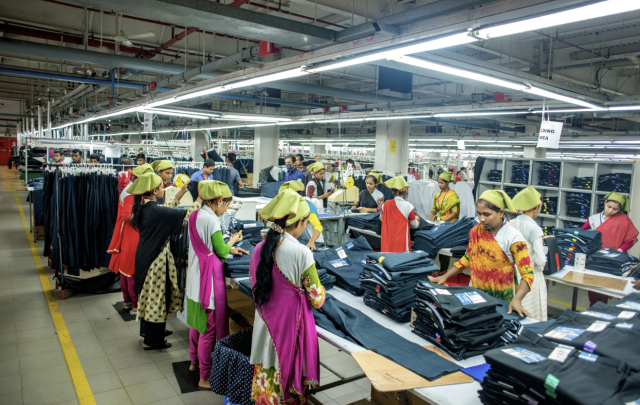
In brief...
With a strong El Niño set to drive heatwaves into 2027, manufacturers warn that rushing heat stress into audit checklists could leave workers no better protected. Innovation Forum and the Fashion Producer Collective organised an online webinar and breakout rooms with brands and suppliers to work through the remaining uncertainties, with practitioners from Epic Group, Shahi Exports and the Fashion Producer Collective.
Closing polls at Innovation Forum’s 2026 apparel and textiles conferences named heat stress a key takeaway. The warnings have since grown louder. In September the World Meteorological Organization said El Niño was “firmly established and will intensify into a very strong event in the coming months”, with impacts extending well into 2027.
Brands are now moving from awareness to action, and that brings its own risk of fragmented initiatives designed without reference to the factory floor.
An old problem for manufacturers
The panel was clear that heat stress is new only to the mainstream agenda. “Heat stress has not been a new challenge, especially for manufacturers that have been operating in the global south,” said Gouthi, noting that Shahi has been working on mitigation since 2016. Van der Weerd recalled a manufacturer asking her in 2021 whether its capital should go towards the emissions cuts customers were requesting, or towards preparing for a hotter world.
For Ralapanawe, the trigger was the 2024 El Niño, when Epic felt it was not ready. Heatwaves tend to reach Asia in the latter part of an El Niño cycle, he said, which points to spring 2027 for the current one.
What has changed is brand attention, much of it driven by due diligence and regulatory risk. Van der Weerd welcomed that pressure as a catalyst, but said it makes a conversation about how the industry ecosystem approaches this topic, and particularly the notion of compliance, urgent. Gouthi asked brands not to turn heat stress into “overnight expectations and audit requirements”. Once the focus shifts to meeting a checklist, she said, the industry loses sight of the larger aim of protecting workers.
Three tensions
FPC’s community of practice on heat stress has produced a preliminary needs map built from manufacturer perspectives. It frames the challenge as three questions a factory has to answer, and each carries its own tension. “At each of these three levels of needs, it’s not necessarily as straightforward as it seems,” said van der Weerd.
1st tension: is action needed? Context versus standardisation
Deciding when to act takes more than a thermometer reading. Humidity, radiant heat, air movement, workload, clothing and PPE all play a part, and conditions vary between sections of the same building. The challenge, van der Weerd said, is making that assessment in a way that is contextually relevant yet still somehow standardised.
Ralapanawe pointed to the sector’s standard metric, wet bulb globe temperature (WBGT), a composite index of temperature, humidity and radiation. High temperature with low humidity and lower temperature with high humidity can give the same WBGT value, yet “how the body reacts to that is quite different”. The industry risks “trying to build a standard without adequate knowledge around the science behind it”, he warned, and being prescriptive could make conditions worse. Gouthi added that “even thresholds are contextual”.
Worker perspective was a major part of the discussion. Measurements alone miss how heat is experienced on the line, so panellists called for a mix of quantitative and qualitative data. Ralapanawe described the “number-assisted” approach built into the American Apparel & Footwear Association’s (AAFA) guidance: readings inform decisions, but workers can also trigger action when their comfort levels are crossed, even if readings stay below the threshold.
2nd tension: which intervention? Tailored solutions versus one-size-fits-all
Shahi operates more than 50 facilities, and Gouthi stressed that no two sites, or even sections, share the same risk profile. The company sets a safety baseline across all of them, then equips each site to decide what it needs.
Interventions fall into two groups. Administrative controls include adjusted shift hours, mandated breaks, work stoppages during extreme heat, medical readiness, access to cold water and sanitation, changes to canteen diets in peak summer, and protection for vulnerable workers, such as ensuring no pregnant worker is placed near heat-generating machinery. Engineering controls include ventilation, fans and localised cooling for hotspots, chosen according to whether the problem is temperature, humidity or both.
New builds allow far more. This includes the work Epic Group did in building a campus in Odisha, India, designed as net-zero carbon, net-positive water and to withstand extreme weather events driven by the climate crisis. The factory uses high-temperature heat pumps, battery storage, low-energy air conditioning and seven-stage, infiltration-centric stormwater management, among other measures. Existing sites are harder. In Bangladesh, Epic plans to retrofit insulation and ventilation across its factories: expensive work that Ralapanawe said is “not designed for payback”.
Van der Weerd said manufacturers also need help comparing options: a factory facing ten possible interventions needs a way to judge which will have most impact. In decarbonisation, suppliers were often handed prescribed solutions which the panel argued is one of the reasons the industry has seen poor progress towards net-zero.
3rd tension: getting it done. Investment v.s. expense
This comes as projections of the costs, investment and returns of heat adaptation are still being developed. Many interventions have no return at all. “In that case, this is not an investment decision, it’s just an expense,” said van der Weerd, which raises the question of who pays.
Capital expenditure, such as a retrofit or a new cooling system, is a one-off decision. It can be planned, financed and in principle co-funded with brands or lenders, though it still depends on access to capital, the feasibility of the infrastructure and confidence that a factory will still have orders in a few years’ time.
Operating costs are harder. Ralapanawe said managing opex is “much more complicated” because it goes “into the heart of our costing mechanism”. Running cooling raises energy bills every season. Administrative controls carry costs too: mandated breaks and work stoppages cut output against fixed production targets and shipping dates, while overheads stay the same. Those costs recur year after year and land in the price of every garment, yet they rarely feature in the commercial terms agreed with brands. Plans must also look 10 to 15 years ahead, so the bill will grow.
The tension extends to climate targets, since cooling uses energy. “If you have a decarbonisation plan which does not integrate proper management of heat stress, your decarbonisation plan fails,” Ralapanawe said. A breakout group put it more bluntly: factories cannot switch off cooling to hit an emissions goal.
His ask of brands was a facility-level conversation that includes commercial terms. “If you keep commercial relationships outside the conversation, I can guarantee you as an industry we will not survive this.” Gouthi asked brands to trust suppliers who are honest about their gaps, and to get specific about what shared responsibility means in practice.
Compliance: anchor or prison?
Framing all of this is the question around due diligence. Compliance can anchor sustainability work, and it can also confine it. Breakout groups heard that brands often feel they need a number for reporting, such as WBGT readings staying below a set level. Participants argued compliance should instead mean accountability to a process: a manufacturer has defined how it measures, set thresholds it can justify, and acts on what it finds.
Groups also called for CFOs, procurement teams and local governments to join the conversation. One participant described heat stress as the new occupational health conversation, noting that incidents such as Rana Plaza have historically forced change.
Practical next steps: the AAFA guidance
The practical detail sits in AAFA’s guidance, developed with FPC and a group of manufacturers including Epic Group and Shahi Exports. The toolkit rests on five principles: protecting workers through early identification, measuring to act, sharing risk and financial responsibility, prioritising context over prescription, and two-way communication between brands and manufacturers. Its components are:
- Heat stress toolkit (overview page)
- Toolkit introduction
- Heat stress management guidelines for manufacturers
- Heat stress management workbook for manufacturers
- Heat stress implementation guidelines for brands
- Brands’ supplier survey questionnaire
- Guide to protecting workers from heat stress, version 2.0 (April 2026)
These resources are a strong guide, built on the best knowledge we currently have. Heat stress remains an evolving discussion, though, and Ralapanawe’s closing point was about expertise: identify the scientific and technical gaps, and bring in “the correct technical partners” to fill them. That work, he said, should lead to a shared industry framework that still accounts for the circumstances of individual factories and workers.
Author details


 Apparel


 Webinar
 Podcast