 Article
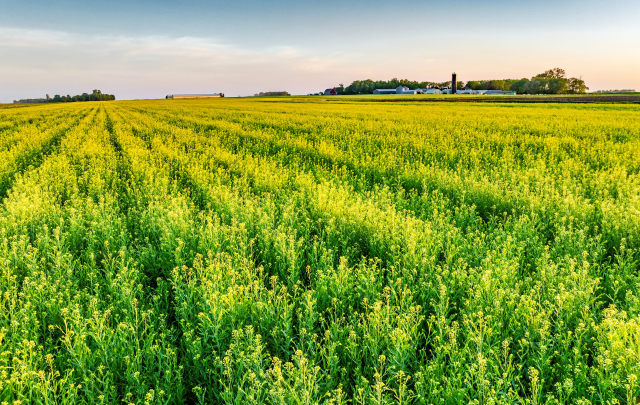
As agriculture faces mounting pressure from climate volatility, supply chain decarbonisation, and growing demand for sustainable fuels, companies across the food and energy value chains are looking for practical ways to reduce emissions while strengthening farm resilience.
This webinar, hosted by Innovation Forum in partnership with Cargill, brought together research, agronomy, and farmer insights to explore winter camelina — an emerging renewable fuel feedstock that can provide farmers a new revenue stream and agronomic benefits without requiring additional land
What is crop innovation — and why does it matter?
Lyle DePauw, director of crop innovation business development at Cargill, opened the discussion by framing crop innovation as a response to some of agriculture’s most pressing challenges. For Cargill, it means identifying new or improved crops that can deliver value across the food, feed, and fuel ecosystems — while helping farmers strengthen soil health and improve the productivity of existing farmland.
Cargill is investing across the full spectrum, from research and breeding to agronomy, supply chain readiness, and moving crops from pilot to scale. The aim is to support crops that are commercially viable, agronomically sound, and aligned with emerging customer demand for lower-carbon supply chains.
"Crop innovation is really about how do we make some of these new concepts, these new ideas available to farmers in our supply chain."
Camelina: The crop at the centre of the conversation
What is the winter camelina?
Camelina sativa is an oilseed crop with a long history, but new research into winter camelina (planted in autumn and harvested in early summer) is expanding its potential in colder climates in the northern United States.
Unlike traditional oilseeds, winter camelina grows during the ‘shoulder season’ — the months when fields in the Upper Midwest would otherwise lie bare. Using a relay cropping approach allows farmers to effectively grow three crops in two years, without requiring additional cropland or replacing primary food crops in the rotation.
Key agronomic characteristics include:
- 35–40% oil content (similar to early varieties of canola)
- Very small seeds
- Rapid spring growth that out-competes weeds
- Winter hardiness comparable to winter rye
- A long taproot system that anchors soil through winter
The sustainable aviation fuel connection
Sustainable aviation fuel (SAF) and renewable diesel are the big commercial drivers behind camelina’s development. By 2040, demand for renewable fuels is expected to double — and existing feedstocks such as used cooking oil, tallow, and vegetable oil are unlikely to provide sufficient supply.
Camelina oil can be processed into SAF and renewable diesel. Depending on the accounting methodology used, this fuel can reduce greenhouse gas emissions by:
- Around 50% compared to conventional jet fuel under the US GREET model
- Up to 75% or more under international CORSIA accounting, which credits camelina for reducing indirect land use change
Environmental benefits: more than just fuel
Mitch Hunter of the Forever Green Initiative at the University of Minnesota outlined the broader environmental case for winter camelina. The initiative has found strong evidence across several areas:
- Nitrate leaching reductions of 70-90%, a critical water quality benefit
- Erosion reductions of 50–70%, protecting both soil quality and downstream water bodies from sediment and phosphorus
- Early-season flowering that provides a major food source for pollinators at a time when little else is in bloom
- Soil carbon additions through root systems and residue, contributing to soil health over time
Carbon sequestration benefits, while promising, remain uncertain and are not yet recognised by major carbon markets or science-based accounting frameworks. Hunter emphasised that ongoing research is working to better quantify these effects under different soil and climate conditions. Even without those credits, he argued, the environmental case for camelina is compelling.
Camelina vs. traditional cover crops: A different model
While cover crops have been championed for decades as a gold standard for conservation outcomes and provide important soil health benefits, their adoption has remained stubbornly low in Minnesota — largely because they offer no immediate financial return to farmers.
By developing supply chains for crops such as camelina that cover the soil and can also be harvested and sold, the conservation practice becomes embedded in the farm’s economics rather than dependent on government subsidies or environmental programmes.
What it looks like on a real farm
Anne Schwagerl, a row crop farmer in West Central Minnesota and now in her fourth year of growing camelina, shared a grounded account of what this looks like in practice.
The growing calendar
- Soybeans are harvested in mid-to-late September
- Camelina is no-till drilled directly into the soybean stubble
- Over winter, the plant establishes a deep taproot — most growth is underground
- In spring, Camelina takes off quickly, ahead of anything else that could be planted
- Fertilised in spring (a low rate of nitrogen is recommended by researchers)
- Harvested at the end of June or early July
- A cover crop or relay crop then follows, ahead of corn the next season
Surprises and benefits
Schwagerl said the crop’s weed competitiveness had been its most striking quality. Even during her farm’s years of organic production, camelina fields were her cleanest — and in conventional systems, it is now reducing the number of herbicides passes needed, cutting input costs alongside the soil and environmental benefits.
Challenges to acknowledge
Schwagerl was candid about the difficulties too. Establishment can be unpredictable — one season, a crop drilled into dry soil simply never germinated. The seed is very small and requires appropriate drilling equipment. Planting timing windows can be narrow, especially with increasingly erratic autumn weather. And as a new crop, there is still a learning curve for management and post-harvest handling.
Building the market: Cargill’s approach
Barriers to adoption
Anna Teeter, novel oilseeds program manager at Cargill, described the core challenge: unlike corn, soybeans, or wheat (which have decades of infrastructure behind them) camelina is starting from scratch. Farmers need to learn how to combine it, store it (as an oilseed in summer), and manage it within diverse rotations. The industry needs to step up to provide that infrastructure.
De-risking for growers
To support early adopters, Cargill has introduced several mechanisms to reduce the financial risk:
- Full production contracts — Cargill commits to purchasing everything the farmer grows
- Access to quality seed
- A minimum revenue guarantee, functioning like crop insurance while growers build a production history (federal crop insurance requires three years of data before growers are eligible)
- Peer-to-peer farmer networks to share learning and best management practices
Markets for the whole crop
60-65% of the product coming out of a crush plant is meal, not oil. A viable market for the meal is therefore essential to the economics. Currently, camelina meal can be fed to broilers, layers, and beef cattle, with interest in further applications including dairy, aquaculture, industrial uses, and pet food supplements. The omega-3 to omega-6 profile of camelina oil also makes it potentially attractive for aquaculture.
On the oil side, SAF and renewable diesel remain the primary market drivers, but industrial and food market interest provides additional flexibility.
"It's a game changer. The fact that we know sustainable aviation fuel is a very hungry market — this is something that farmers can provide a product for."
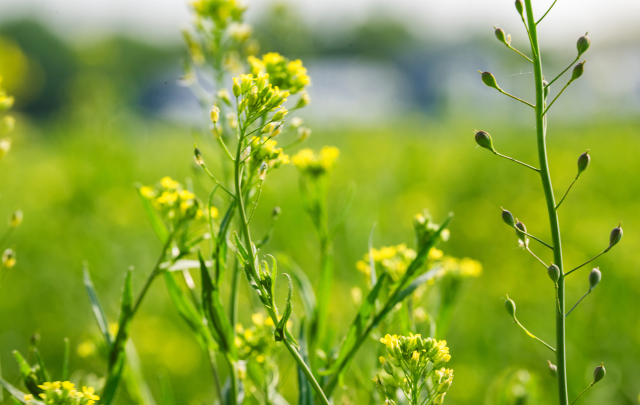
Winter camelina
Scale and future potential
Mitch Hunter outlined the scaling potential based on analysis of the Upper Midwest. Even focusing only on rotations where camelina currently performs well — following spring wheat, winter wheat, and corn silage — the team estimates a realistic addressable area of at least 5 million acres. If agronomic barriers to growing it after grain corn can be overcome, this could expand to 20–30 million acres across the broader region.
The crop is still early-stage, and the team is clear about this. But the breeding programme (accelerated through partnership with Cargill) is working to improve yield, disease resistance, and harvest characteristics. Genomic tools are being used to identify beneficial traits, though the breeding approach remains conventional rather than using gene editing, partly to keep international markets open.
Looking beyond camelina, the panellists identified a growing family of winter and spring oilseed crops being developed for similar purposes, including winter canola, carinata, and winter pennycress — all targeting the same renewable fuels market.
What the industry needs to do next
The panel closed with calls to action across the value chain:
- Policy pull: Anna Teeter was direct — policy drives demand, and demand drives investment. ‘Policy, policy, policy,’ she said. ‘If you have demand, the rest will follow.’
- More industry partners: Anne Schwagerl called for more companies like Cargill to invest in developing the value chain. ‘The need is there across the whole chain.’
- Feed industry engagement: Mitch Hunter identified the meal market as the single biggest unlock needed. Strong oil demand already exists; bringing strong meal demand online would signal ‘flashing green lights’ for expansion.
- Technology transfer: Lyle DePauw invited businesses across the supply chain — from equipment manufacturers to processors — to bring their technologies to bear on camelina’s development. ‘We’re borrowing good ideas from other crops… we want to bring that technology in as fast as we can.’
- Continued R&D: The Forever Green Initiative is launching a Continuous Living Cover Market Builders Programme, working on camelina and 15 other crops with the same theory of change.
Camelina is not yet a proven commodity crop — establishment challenges, yield variability, and infrastructure gaps remain real. Whether it scales will depend on sustained demand, policy clarity, and continued research. What it does illustrate, however, is how cropping systems can evolve to generate both economic and environmental value from land already in production.
"Let's keep the soil covered all year round. Let's do it in a way where farmers have an economic incentive to plant that crop year after year because they get to sell something they harvest."
Author details

 Webinar


 Agriculture

 Podcast
