Article
A clear shift that transpired at future of food and beverage series is that sustainability is no longer treated as a standalone agenda. It is increasingly viewed through the lens of risk, resilience and long-term value creation. The conversation has moved beyond why businesses should act, and towards how impact can be scaled.
Across discussions on AI, regenerative agriculture, biodiversity, water, consumer trust, and circularity, six key themes emerged.
Sustainability strategy is business strategy
One of the strongest themes was the changing language of sustainability.
It is no longer positioned as a moral obligation or tick-boxing exercise, but as a driver of risk mitigation, supply chain resilience and long-term value creation. Resilience is increasingly replacing sustainability as the core narrative, reflected in a stronger focus on ROI, cost savings and business value.
This was clearest in conversations around procurement, where internal teams are being seen as strategic partners in driving sustainable sourcing and supplier engagement. Regenerative agriculture discussions focused on future-proofing existing systems against climate and supply chain disruption, while circularity sessions explored how waste streams, reusable packaging and by-products can unlock revenue as well as reduce environmental impact.
On water risk, attendees framed availability and quality as critical to business continuity. The challenge is no longer awareness but securing executive attention to pre-empt and mitigate risk.
Trust has become the most valuable currency
Whether discussing consumer communications, supplier relationships or sustainability claims, trust emerged as central to long-term credibility.
In Amsterdam, discussions centred on regulation. New legislation, such as the empowering consumers for the green transition directive, is raising the bar for environmental claims and pushing businesses to balance communication with scrutiny. Many attendees saw this as an opportunity to build credibility and improve sustainability messaging.
In Minneapolis, the focus was the consumer perspective. Participants agreed that sustainability still influences purchasing decisions, but only when claims are specific, relevant and evidence-based. Trust is shaped by previous brand experiences, the retail environment, and visible action, rather than vague promises.
Despite significant progress, participants struggled to identify a food and beverage company that fully ‘talks the talk and walks the walk’. The consensus was that the industry still has work to do to bridge the gap between ambition and credibility.
Data is no longer the challenge; driving action is
Across discussions on AI, biodiversity, water and regenerative agriculture, there was a clear shift in conversation around data.
Five years ago, many organisations were focused on how to collect environmental data. Today, the challenge is increasingly about deciding which information matters most and how to translate it into meaningful decisions.
AI emerged as a major enabler. Participants highlighted its potential to accelerate R&D, optimise operations, monitor agricultural systems in real time and model interventions before implementation. At the same time, AI is only as effective as the data behind it; human oversight, governance and data quality remain essential.
Similarly, biodiversity and water discussions suggested that many measurement tools already exist. The next challenge is moving from reporting to action, so the data can inform procurement, investment and long-term strategy.
Building resilience starts with farmers; they cannot carry the transition alone
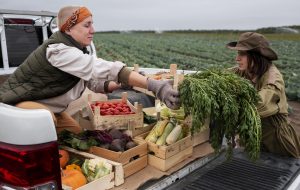
Farmers were consistently placed at the heart of the conversation. Regenerative agriculture was described as a transition involving every part of the supply chain, from financial institutions to manufacturers, retailers and governments.
Discussions highlighted a clear reality: farmers cannot continue absorbing the costs and risks of transition alone. Through long-term contracts, shared KPIs or collaborative financing, businesses need commercial models that distribute risk and reward more fairly.
Conversations in Minneapolis expanded on this idea, exploring how empowering women in agriculture strengthens communities and improves programme outcomes, while humanitarian organisations are connecting vulnerable populations to functioning markets rather than creating dependency.
The message was consistent throughout both conferences: resilient food systems depend on resilient farming communities.
Collaboration is (still) the greatest competitive advantage
There was strong agreement that today’s sustainability challenges are far too complex for any organisation to solve alone.
Participants emphasised collaboration across supply chains, sectors and even competitors, from ‘co-competition’ and shared procurement to watershed management, humanitarian partnerships and engagement with downstream buyers.
Collaboration is no longer viewed solely as a sustainability initiative. It is becoming a way to accelerate innovation, reduce risk and unlock investment in solutions that organisations may struggle to scale alone. The transition to more resilient food systems will require shared accountability as much as individual ambition.
Innovation is accelerating, but implementation will define the winners
Innovation across both conferences was striking. Participants explored AI-powered digital twins, regenerative ingredients, circular packaging, upcycled products and digitally native challenger brands. There was broad optimism that modern technologies and business models could transform food systems over the coming decade.
But innovation alone is not enough – participants repeatedly returned to implementation. From securing alignment between procurement, sustainability, finance, and R&D, to building commercially viable business cases, and scaling beyond pilots, challenges still persist. The companies that succeed will be those that move beyond pilots and embed innovation into core business strategy.
What’s next?
Conversations from Amsterdam and Minneapolis suggest the food and beverage industry is entering a new phase of its sustainability journey.
The questions are becoming less about ambition and more about execution. Organisations are no longer asking whether sustainability matters, but how to integrate it into procurement, R&D, commercial strategy, risk management, and long-term investment.
While Amsterdam focused heavily on regulation, governance and implementation, Minneapolis placed greater emphasis on resilience, business value, and consumer trust.
Both pointed to the same conclusion: the future of food will not be defined by compliance alone. It will be shaped by the organisations that demonstrate ambition, build trust, collaborate across supply chains, support farmers through the transition and translate sustainability into long-term competitive advantage.
Author details



 Agriculture


 Podcast