Article
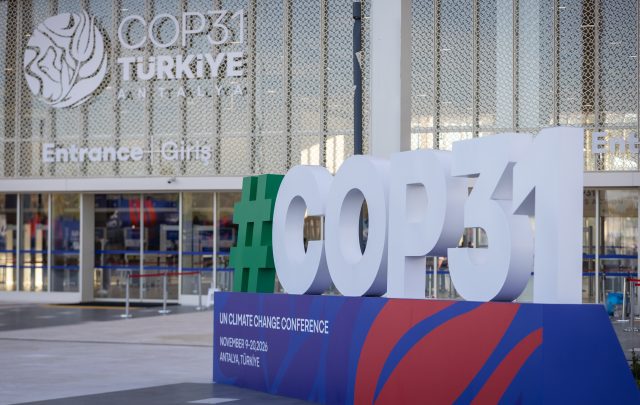
The UN climate summit COP31, now open in Antalya, Türkiye, has a shared presidency: the Turkish government is hosting the conference and leads the action agenda, while Australia’s climate and energy minister, Chris Bowen, is chairing the formal negotiations. But what are the various stakeholder groups attending’s expectations?
In a preview of what’s the come, Carbon Brief points out that civil society groups see getting a just transition mechanism up and running as a key expected outcome. Parties agreed in 2025 at COP30 in Belém to create it and settled key aspects in June 2026, but many details are missing. Countries disagree on its scope and on whether it should be tied to finance.
Finance is itself the other main fault line. Developing countries want a dedicated work programme focused on more public money from developed countries, and have floated the idea of burden sharing. Developed countries would rather improve access to existing funds and widen the pool of donors. On adaptation, COP30 agreed 59 indicators to track progress, but developing countries say finance matters more than measurement and want assurances on the pledge to triple adaptation finance.
Ambition is also under scrutiny. Only around 150 parties have submitted new national climate plans, covering about three quarters of global emissions. Iran, Vietnam, Egypt and Argentina have yet to submit, and the US has withdrawn its plan. The EU wants outstanding plans submitted before the summit and aligned with 1.5C target. COP31 will also launch the second global stocktake, due to conclude in 2028, and the Turkish delegation is pushing for global targets on electrification, waste reduction and building emissions. Lastly, a letter signed by 105 parties calls on the summit to put “the ocean at the heart of climate action”.
Green Claims Directive formally withdrawn
As expected, the European Commission has dropped the Green Claims Directive. The directive was proposed in March 2023, and would have required companies to back environmental claims with scientific evidence and have them independently verified. It would also have tightened the rules on private environmental labels, allowing new schemes only if they were developed at EU level and more ambitious than existing ones. Studies cited in the proposal found that more than half of green claims in the EU were vague or misleading, and 40% were entirely unsupported.
The file stalled after the European Council failed to agree a negotiating position in June 2024. Talks were paused in June 2025 after the European People’s Party, the largest group in the European Parliament, called for withdrawal. It argued the rules were overly burdensome and complex.
The commission then said it would withdraw the proposal unless microenterprises were exempted, although commentators noted that negotiators had already removed them from its scope. The commission’s formal reason is that the proposal has been pending with co-legislators for more than three years, and the council is unlikely to back it within a reasonable timeframe.
Norrøna brand tests seaweed as performance fibre
Norwegian outdoor brand Norrøna is working with Australian materials company Uluu to develop a performance fibre made mainly from seaweed. Uluu ferments sugars from farmed seaweed to produce natural polymers with plastic-like properties, which are melt-spun into yarn. The seaweed needs no farmland, fertiliser or significant freshwater, and the material has passed testing and certification for home and marine biodegradability. Uluu says it does not shed microfibres when worn or washed. UNEP estimates that synthetic textiles account for 16 to 35% of microplastics in the ocean.
The partners have already spun their first fibres, and Norrøna will test durability and performance with one of its key suppliers. This partnership is a result of Norrøna’s ambitious targets addressing CO2 reduction, biodiversity conversation, waste prevention, and responsible sourcing.
Patagonia brings resale onto main website
Patagonia customers can now buy used Worn Wear items, the company’s used clothing business, on patagonia.com and pay for them in the same checkout as new products. Until now, used and new gear were sold on separate websites. Patagonia has also brought Worn Wear’s warehousing, shipping and customer service in-house after previously outsourcing them. The combined checkout completes that move.
Worn Wear was launched in 2017. It buys back used Patagonia clothing in exchange for gift cards, with trade-ins accepted at all US stores and online. Staff check every item for authenticity, condition, function and cleanliness, and used items carry the same company’s warranty as new ones. The business sold nearly 160,000 items in the 2026 financial year, generating about $13m in net sales, and a team of more than 40 people processed over 230,000 items.
Author details


 Cross-sector



 Podcast